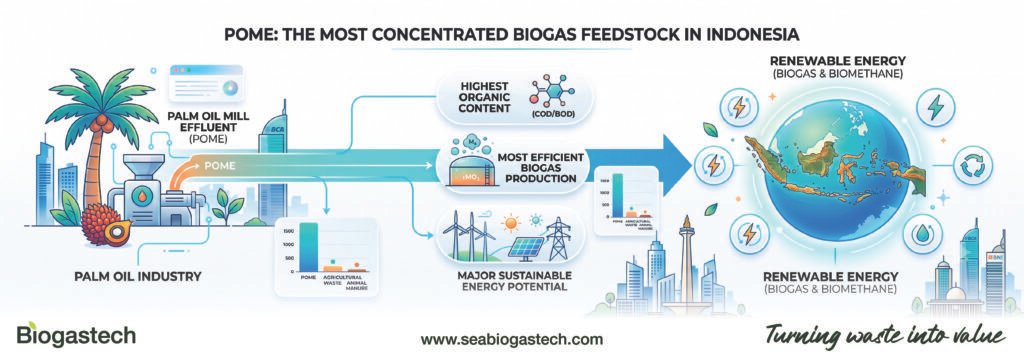
POME: The Most Concentrated Biogas Feedstock in Indonesia

Palm Oil Mill Effluent (POME) merupakan salah satu limbah organik dengan konsentrasi tertinggi di dunia, menjadikannya sangat ideal untuk proses anaerobic digestion.

Karakteristik utama POME:

COD tinggi (25.000–60.000 mg/L)

Produksi stabil sepanjang tahun

Tidak memerlukan biaya pembelian bahan baku

Berada langsung di lokasi dengan kebutuhan energi tinggi

Satu pabrik sawit berkapasitas 60 ton per jam dapat menghasilkan:

1.500–2.500 m³ biogas per hari

15–25 GWh energi terbarukan per tahun

Jika dikalikan 900+ pabrik, potensi biogas Indonesia melebihi 10 TWh.

Bagi SEA Biogas Tech, POME adalah sumber energi terbarukan yang siap dikembangkan dalam skala besar.

SEO Fokus: POME Indonesia, Biogas Pabrik Sawit, Energi Terbarukan Sawit

The Future of Biogas: Indonesia – The Palm Oil Biogas Superpower

An infographic-style illustration titled "INDONESIA: THE PALM OIL BIOGAS SUPERPOWER" featuring a vibrant, sustainable energy cycle. On the right, a lush palm oil plantation flows into a system where organic waste (POME) is processed in large, modern biogas digester tanks. Glowing teal and green energy streams rise from the tanks, fueling a power substation and a futuristic city skyline on the left. The scene is interconnected by flowing ribbons of light, showcasing a clean energy loop that powers homes, hospitals, and electric vehicles, with the tagline: "Fueling the future, empowering communities."

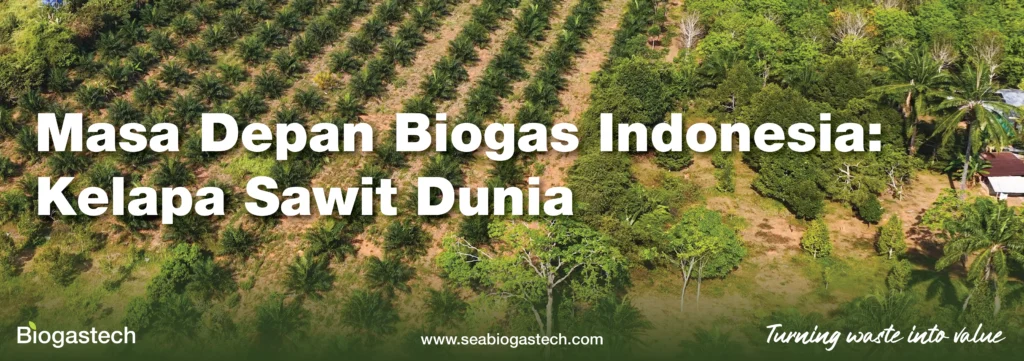
Indonesia adalah produsen minyak sawit terbesar di dunia. Dengan lebih dari 900 pabrik kelapa sawit yang memproses lebih dari 140 juta ton tandan buah segar setiap tahun, Indonesia menghasilkan limbah cair sawit atau Palm Oil Mill Effluent (POME) dalam jumlah sangat besar.

Selama bertahun-tahun, POME ditampung di kolam terbuka yang melepaskan gas metana langsung ke atmosfer. Padahal, metana memiliki dampak pemanasan global 28–30 kali lebih besar dibandingkan CO₂.

Saat ini, potensi tersebut berubah menjadi peluang besar. Biogas Indonesia bukan lagi sekadar solusi lingkungan, tetapi peluang energi terbarukan berskala industri.

Dengan estimasi emisi 50–60 juta ton CO₂-ekuivalen per tahun dari kolam POME, Indonesia memiliki salah satu peluang pengurangan emisi terbesar di Asia.

Bagi SEA Biogas Tech, ini adalah peluang nyata untuk mengubah limbah menjadi aset energi berkelanjutan.

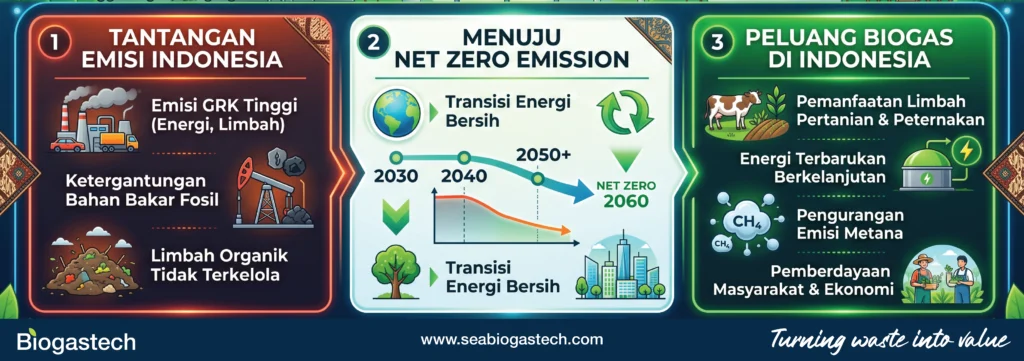
Biogas Indonesia : Menuju Net Zero Emission, Tantangan Emisi dan Peluang Biogas di Indonesia
An aerial, top-down photograph of a dense, lush green forest. In the center of the image, the trees are cleared or shaped to form the silhouette of a large leaf. Inside the leaf shape, there is a body of water reflecting a clear sky, with the chemical formula "CO2" rendered in a dark, mossy texture floating in the center of the water. The image contains several text elements: Top Left: The logo for "Biogastech" in white. Center: Large, bold white text that reads: "Indonesia’s Emission Challenge and the Path to Net Zero." Bottom Center: The website URL "www.seabiogastech.com" in a smaller white font. The overall mood is environmental and focused on sustainability, using the contrast between the green canopy and the water to highlight the theme of carbon emissions. Biogas

Biogas menjadi salah satu solusi penting di tengah kondisi Indonesia yang saat ini berada pada titik krusial dalam perjalanan transisi energinya. Di satu sisi, pertumbuhan industri dan kebutuhan energi terus meningkat setiap tahun. Di sisi lain, tekanan global terhadap pengurangan emisi karbon semakin kuat. Oleh karena itu, pengembangan biogas sebagai energi terbarukan membantu menyeimbangkan pertumbuhan ekonomi dengan tanggung jawab lingkungan yang kini menjadi prioritas nasional dan tidak dapat diabaikan.