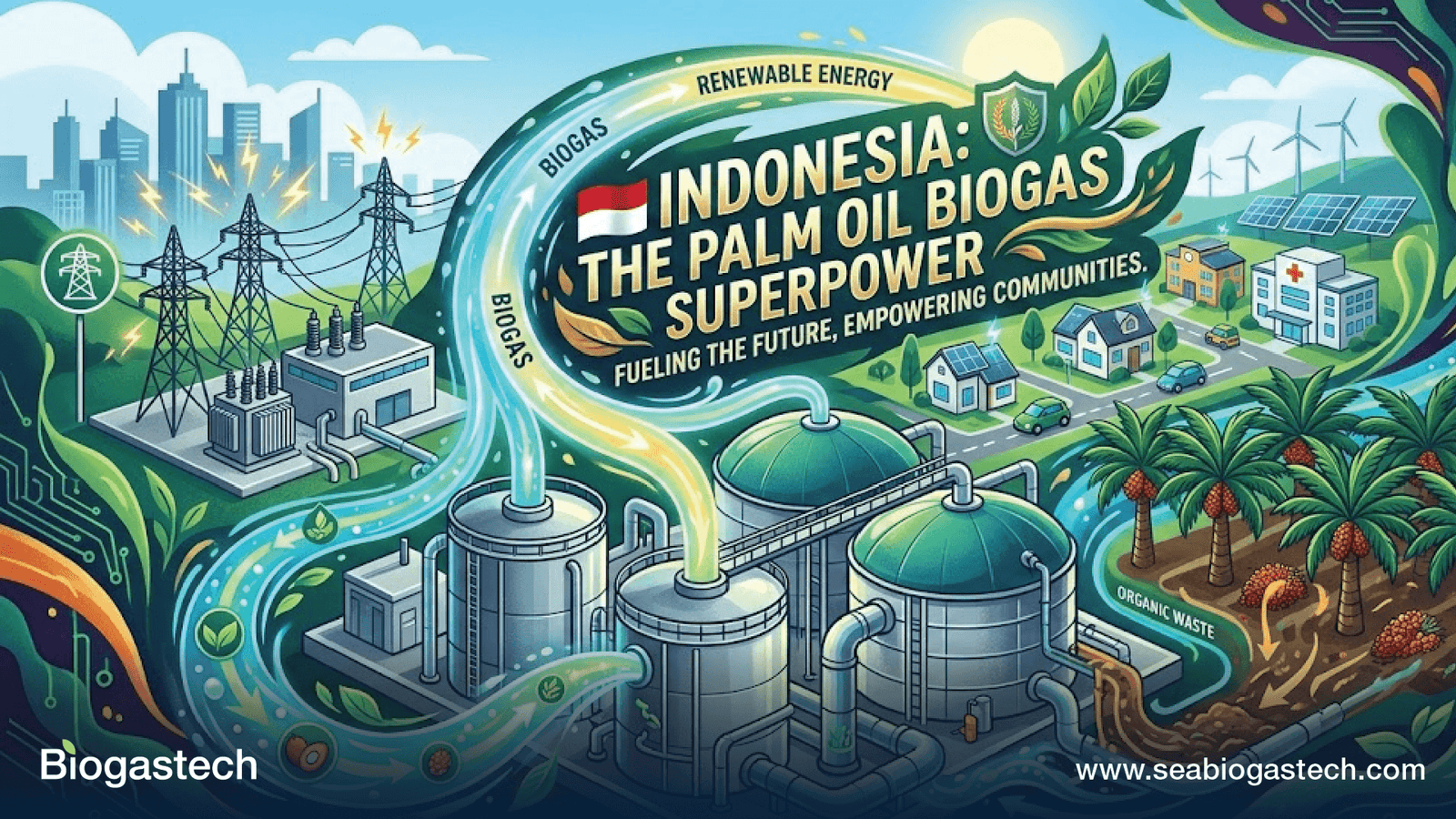
Indonesia is the world’s largest palm oil producer. With more than 900 operational mills processing over 140 million tonnes of fresh fruit bunches annually, the country generates vast volumes of Palm Oil Mill Effluent (POME).
For decades, POME was treated in open lagoons, releasing methane directly into the atmosphere. Today, that methane represents one of the most scalable renewable energy opportunities in Asia.
Indonesia’s palm oil sector emits an estimated 50–60 million tonnes of CO₂-equivalent methane annually from untreated lagoons. Methane is 28–30 times more potent than carbon dioxide over a 100-year timeframe.
What makes Biogas Indonesia unique is not just the environmental need — it is the industrial scale. The feedstock already exists. The mills are operational. The energy demand is on-site.
For SEA Biogas Tech, this is not a theoretical transition. It is a practical, bankable renewable energy opportunity built on existing industrial infrastructure.
SEA Biogas Technology
Sustainable Energy Starts Here
www.seabiogastech.com
https://www.linkedin.com/pulse/future-biogas-indonesia-palm-oil-superpower-chris-negus-0ccxe